Unbeatables’ Field-Exclusion Policy
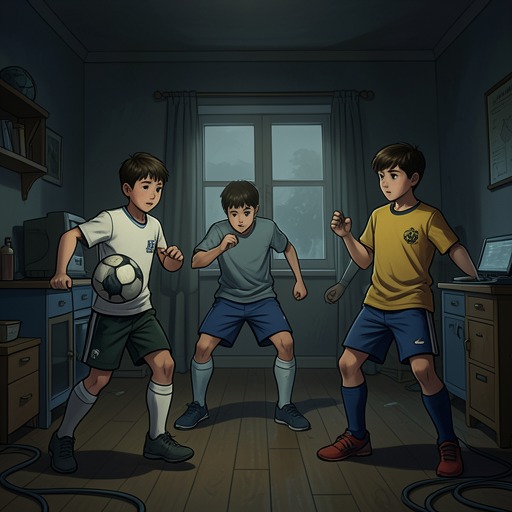
Kevin the Star StrikerUnbeatables’ Field-Exclusion Policy is the rule imposed by Mickey the Bulldozer that the soccer field belongs to the Unbeatables alone. More than a statement about who may play, it is an attempted seizure of the Wild Soccer Bunch’s home ground, and it transforms an ordinary game space into the book’s main arena of authority, resistance, and negotiated justice.
Definition and Imposition
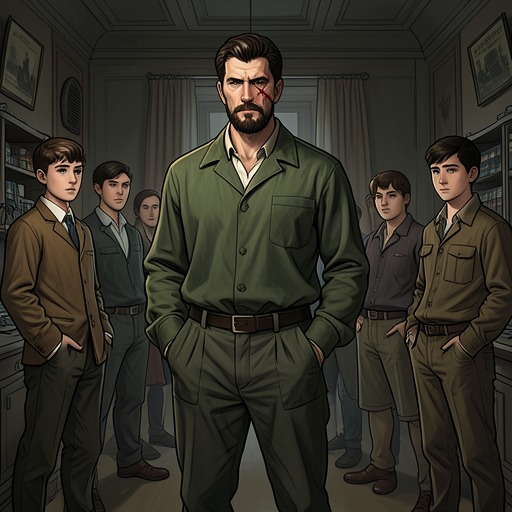
The policy is announced when Mickey the Bulldozer arrives at the gate with his intimidating followers. He declares that the field belongs to the Unbeatables and that only they may play there, ordering the Wild Soccer Bunch to leave. The declaration is backed not by a recognized referee or shared agreement but by Mickey’s physical dominance, his reputation as the toughest boy in the school and neighborhood, and the presence of the group surrounding him.
Mickey’s authority depends on spectacle as much as on force. He is described as the “Darth Vader” of the boys’ world, with a real, threatening face rather than a science-fiction mask, and he does not travel alone: his followers gather around him like flies around garbage. The policy therefore presents exclusion as a performance of power. Naming the group the Unbeatables and announcing their exclusive right to the field are meant to make their victory appear already settled before any soccer has been played.
The Field as Contested Territory
The Wild Soccer Bunch rejects the policy because the field is not merely an interchangeable patch of ground. It is their soccer field, the place where their friendships, roles, and collective identity operate. Kevin refuses to accept that intimidation can erase their claim, even while the surrounding threat makes clear that the Unbeatables are prepared to enforce the rule physically. The field becomes a miniature social order in which one group attempts to define who belongs and who must disappear.
The exclusion also exposes the contrast between the two teams. The Unbeatables present strength as solitary dominance, ridicule, and the ability to make weaker players retreat. The Wild Soccer Bunch answers with persistence and collective action. Their resistance is not based on pretending that fear is absent. During the later confrontation, Diego voices the fear shared by the team, while Larry argues that fear can become their strength. The policy thus creates the condition in which the Wild Soccer Bunch must decide whether courage means denying vulnerability or acting together despite it.
Challenge and Rule-Making
Kevin answers the occupation with a formal challenge rather than an immediate physical fight. He gives Mickey two weeks before the Wild Soccer Bunch returns to contest the field through soccer. If the Unbeatables win, the field will remain theirs; if the Wild Soccer Bunch wins, Mickey and his followers must leave and the field will belong to the original team again. This proposed settlement changes the meaning of the exclusion policy: Mickey’s claimed right is forced into a contest whose result can be judged on the field instead of presumed from his reputation.
The challenge introduces an important distinction between rules and coercion. The Wild Soccer Bunch accepts that the challenged team may choose the conditions, and Mickey uses that privilege to arrange disadvantages for his opponents. He makes them play with the sun in their eyes and explains that the challenged side gets to choose its weapons. He also proposes a match lasting until one team scores ten goals, partly because he expects to finish quickly and return home within twenty minutes. The language of fair competition remains in place, but Mickey bends the game’s structure toward his own power.
His rule-making extends to physical contact. When the Grim Reaper knocks Tyler down and then injures Julian with an elbow, Mickey declares that body contact is allowed. The policy’s underlying logic becomes visible in this moment: rules are not neutral boundaries but instruments controlled by whoever currently dominates the field. The Unbeatables use the vocabulary of a match to legitimize conduct that makes the contest increasingly resemble an assault.
Consequences and Resistance
The first phase of the challenge appears to validate the exclusion policy. Mickey scores five goals in seven minutes, while Julian’s eye becomes dark green, blue, and violet, Tyler holds his ribs, and Kevin has a badly scraped knee. The Wild Soccer Bunch is reduced to staring at the grass, and even Kyle and Joey sit down beside the injured players. The policy therefore produces more than exclusion from play; it creates humiliation, bodily pain, and the impression that the Unbeatables’ claim cannot be overturned.
Yet the defeat does not end the dispute. Joey insists that the last laugh has not been decided, and Roger adds a condition of his own: the losing team must repair Larry’s stand. This condition relocates the conflict from pure domination to reciprocal responsibility. The field is no longer governed only by Mickey’s demand that others leave. The match now carries a consequence that links victory to the repair of damage and gives the Wild Soccer Bunch a concrete stake beyond pride.
The team’s response is collective and ceremonial. Standing shoulder to shoulder, the Wild Soccer Bunch roars, “ONE, TWO, THREE WILD!” and immediately begins a coordinated passing sequence involving Kevin, Alex, Tyler, Danny, Joey, and the other players. The movement contrasts sharply with Mickey’s individual scoring display. Even when Octopus catches Kevin’s shot and Mickey scores again, the sequence demonstrates that the Wild Soccer Bunch can answer exclusion through cooperation, organized play, and refusal to accept the Unbeatables’ version of reality.
Significance
Unbeatables’ Field-Exclusion Policy supplies the central territorial conflict of the story. It converts a familiar children’s soccer field into a border controlled by a self-appointed ruling group, then exposes how quickly a game’s rules can be distorted when one side claims the right to define participation, conditions, and acceptable contact. The policy is challenged not simply by greater aggression but by a competing idea of order: the field should be secured through a contest, shared commitment, and consequences that bind both teams.
Its larger significance lies in the difference between possession and belonging. Mickey can occupy the field and make the Wild Soccer Bunch retreat, but occupation alone does not settle who the field is for. The repeated challenge, the team’s willingness to confront fear, the repair condition, and the shouted “ONE, TWO, THREE WILD!” all keep the field’s meaning open. The policy tries to make exclusion permanent; the narrative answers by making belonging something that must be defended together.